Drainage RAMS Template
Written by Darren Wells, 25 years on UK infrastructure programmes including CTRL, Crossrail and Network Rail.
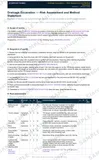
This drainage RAMS template covers the whole job of putting drainage in the ground: finding the services, digging and supporting the trench, controlling groundwater, laying and jointing the pipe, testing it, backfilling and reinstating. It is written as one sequence, so the risk assessment and the method statement describe the same work in the same order.
 See what you get →
When the client says the services were not surveyed before excavation, or the trench was backfilled before inspection, the question is always the same: what did you have in place and when?
This document is the answer to that question. It records what was checked, who checked it, and when the works were carried out. A completed RAMS with signatures is not a guarantee — it is evidence. The client’s adviser knows the difference.
Completed except the facts only you know
£45 + VAT
£54 inc. VAT
- We fill in from your answers: method, hazards, controls and risk scores for your works.
- Stays [TO CONFIRM]: the site facts only you know: site address and postcode, nearest A&E, named people and contacts.
- A competent person reviews and signs it before use.
Template
£15 + VAT
£18 inc. VAT
Blank RAMS — fill in yourself
- Word document (.docx)
- Guidance notes included
- Instant download
- Use on any project
Prices exclude VAT: UK customers pay 20% VAT; VAT is not charged for customers outside the UK.All documents are drafts. Placeholders marked [TO CONFIRM] must be completed with your site-specific details. A competent person must review before use on site.
What it's for
A drainage run brings together most of the serious risks in groundworks in one place: buried services, trench collapse, plant moving close to people, water in the excavation and heavy pipes being handled. This RAMS sets out how each of those is controlled, so the gang, the supervisor and the client are all working to the same plan.
When you need it
Before any excavation for new drainage, sewer connections or pipe replacement starts. Most principal contractors will not let you start until it has been submitted and accepted. Review it if the depth, ground conditions, pipe size or dewatering method changes.
Who signs it
The RAMS is prepared by a competent person (usually the supervisor or site engineer) and approved by the project or site manager. Every operative signs the briefing record to confirm it has been explained to them, and anyone joining later signs before they start.
What's inside
- Document control with a revision history, distribution list and review triggers; valid only when signed and briefed
- Scope of works, programme and working hours
- Legislation and guidance, including HSG47 and BS EN 1610
- Responsibilities and contacts, including the temporary works coordinator, appointed person for lifting, principal contractor and client
- Resources: labour with cards or competence, plant with operator competence and inspection dates, and materials
- Principal contractor induction and site familiarisation before anyone starts
- The permits it relies on: permit to dig, permit to load, permit to pump and confined space
- A ten-step sequence of work from service scan to reinstatement
- A risk assessment scored before and after controls, with a 5×5 matrix and action bands, for service strikes, collapse, falls, plant, groundwater, manual handling and leptospirosis
- Emergency arrangements: 999, site location and emergency access, the nearest 24-hour A&E, contacts, first aid, fire and assembly points, service strike (including the gas and power emergency numbers), trench rescue and RIDDOR reporting
- A confined space emergency procedure: no one enters a manhole or chamber until rescue arrangements are in place
- Environmental controls and a spill response procedure
- PPE, weekly toolbox talks and a 14-person briefing record
FAQ
- Is there a safe depth for an unsupported trench?
- No. Shallow trenches can collapse without warning and still kill. Nobody enters any excavation unless its sides are supported or battered back as the temporary works design or RAMS requires.
- Does the RAMS replace the permit to dig?
- No. The RAMS describes how the job is done. The permit to dig is issued for a specific location once the services have been checked. The RAMS refers to the permit, and both are needed.
- Is testing included?
- The method includes an air or water test to BS EN 1610 before backfilling. Record the results on a separate drainage pressure test record.
- Can I use it for a sewer connection?
- Yes, but add the water company’s requirements and confined space controls if anyone will enter a manhole.
- What is [TO CONFIRM]?
- Details only you know, such as your site address and postcode, the nearest A&E, named people and contact numbers. We never guess these. They appear as highlighted [TO CONFIRM] placeholders, and the document opens with a list of every one, so you can fill them in before the RAMS is signed and used.
- Can I edit the document?
- Yes. Both options are Word documents you can edit freely.
- Do I still need to review it?
- Yes. A competent person must check every document against the actual site and works before it is used. ClarusDocs gives you a complete first draft, not a substitute for that check.
Related documents
- Pre-Backfill Inspection ChecklistThe check that pipes, bedding and surround are right before the trench is filled
- Drainage Pressure Test RecordThe air or water test record that proves new drains don’t leak
- Permit to PumpApproval to pump out water, with where it goes and how silt is controlled
- Service Search and CAT Scan RecordProof that services were searched for and scanned before digging
- Confined Space Risk AssessmentStarts with the first question: can entry be avoided?
- Confined Space Rescue PlanThe rescue plan that has to be in place before anyone goes in