Accident Investigation Report Template
Written from experience on CTRL, Crossrail and Network Rail
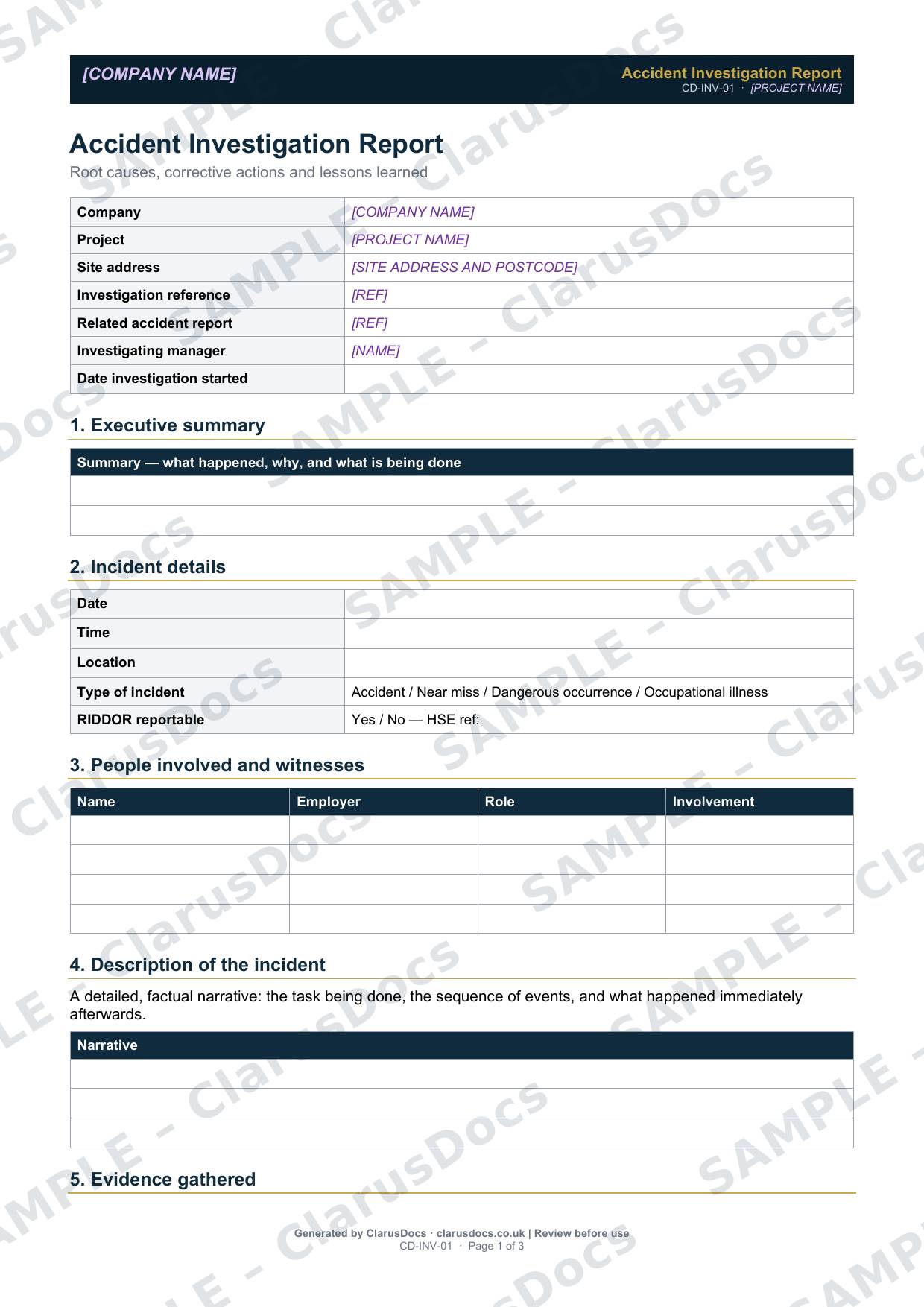
This accident investigation report template is used after an accident, near miss or dangerous occurrence to find out why it happened, not just what happened. It records the evidence, the immediate and root causes, the corrective actions and the lessons learned.
 See what you get →
Completed except the facts only you know
£29 + VAT
£34.80 inc. VAT
- Fills in: Header details and the items to check for your project.
- Stays [TO CONFIRM]: References, names and locations you haven’t given us. Results, readings, dates and signatures are left blank.
- A competent person must review before use.
- Company logo in header
- Delivered in minutes
- Word document (.docx)
Template
£12 + VAT
£14.40 inc. VAT
Blank form — fill in yourself
- Word document (.docx)
- Guidance notes included
- Instant download
- Use on any project
Prices exclude VAT: UK customers pay 20% VAT; VAT is not charged for customers outside the UK.All documents are drafts. Placeholders marked [TO CONFIRM] must be completed with your site-specific details. A competent person must review before use on site.
What it's for
A report that stops at "operative error" leaves the real causes in place. The template leads the investigator from the facts to the evidence, from the unsafe acts and conditions to the management, human and environmental causes behind them, and on to actions that change something. It also records who needs to hear the lessons.
When you need it
After any accident, near miss or dangerous occurrence that justifies an investigation, especially if it was RIDDOR reportable or had the potential to cause serious harm. It follows on from the accident report form.
Who signs it
The investigating manager signs it, and a director reviews it.
What's inside
- Incident references, the investigating manager and an executive summary
- Incident details, including RIDDOR status and HSE reference
- People involved and witnesses, and a factual narrative
- An evidence checklist: photos, witness statements, equipment inspection, conditions, documents and CCTV
- Immediate causes, root causes and contributing factors
- Actual and potential severity, and the likelihood of it happening again
- A corrective action table linked to the corrective action register
- Lessons learned, a communication plan and sign-off
FAQ
- What is a root cause?
- Something the organisation can change, such as planning, supervision, training, equipment or how the RAMS was prepared. The template asks you to keep asking "why?" until you reach one.
- Should near misses be investigated?
- Yes, especially those with the potential for serious harm. The template rates potential as well as actual severity.
- How do the actions get followed up?
- Enter each action on the corrective action register, so it is tracked until it is closed.
- What is [TO CONFIRM]?
- Details only you know, such as references, names and locations. We never guess these. They appear as highlighted [TO CONFIRM] placeholders, and the form opens with a list of every one. Results, readings, dates and signatures are left blank for completion at the time.
- Can I edit the document?
- Yes. Both options are Word documents you can edit freely.
- Do I still need to review it?
- Yes. A competent person must check every document against the actual site and works before it is used. ClarusDocs gives you a complete first draft, not a substitute for that check.
Related documents
- Ecology Clearance RecordRecord that protected species were checked before clearing the site
- Pre-Commencement Meeting Minutes TemplateAgenda and minutes for the meeting that kicks the job off properly
- Health and Safety File — Index and Cover SheetThe front sheet and contents list for the file the client keeps after handover
- CDM Site Induction RecordRecord that everyone was inducted before starting on site
- Accident and Incident Report FormRecord what happened, while it’s fresh — with a body map and RIDDOR check
- Witness Statement FormTake a clear, signed account from each witness