RIDDOR Reporting Guide and Checklist
Written from experience on CTRL, Crossrail and Network Rail
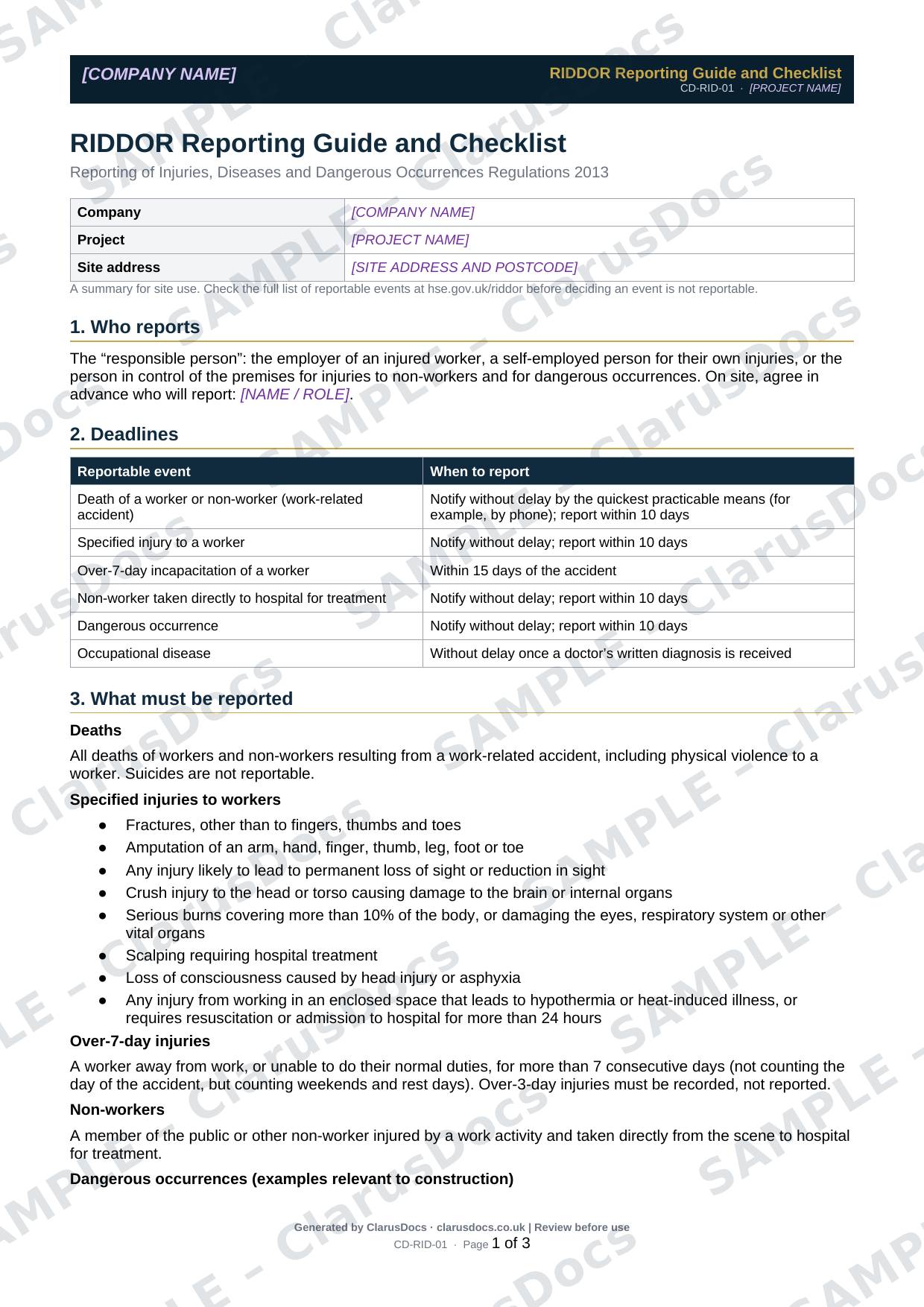
This RIDDOR reporting guide explains which accidents, dangerous occurrences and diseases must be reported to HSE under the Reporting of Injuries, Diseases and Dangerous Occurrences Regulations 2013, who reports them and by when, with a checklist to show the right action was taken.
 See what you get →
Free download
Free
No card, no account — just your email
Blank guide — fill in yourself
- Word document (.docx), sent by email
- Deadlines, specified injuries and dangerous occurrences, with a reporting checklist
When an accident happens
Start with the Accident and Incident Report Form.
Prices exclude VAT: UK customers pay 20% VAT; VAT is not charged for customers outside the UK.All documents are drafts. Complete the placeholders with your own details, and have a competent person review them before use.
What it's for
After an accident, the last thing anyone wants is to work out the reporting rules from scratch. The guide sets out what is reportable in a form site managers can use quickly, with examples relevant to construction, and the checklist records that the report was made, the HSE reference, and who else was told.
When you need it
Keep it on site and use it after any accident, dangerous occurrence or diagnosis of a work-related disease. Check the full list on the HSE website before deciding something is not reportable.
Who signs it
The person who made the report, and the site manager.
What's inside
- Who the responsible person is, and a space to agree who reports on your site
- Reporting deadlines
- Deaths, specified injuries, over-7-day injuries and injuries to non-workers
- Dangerous occurrences relevant to construction, such as lifting equipment failure, scaffold collapse and contact with overhead power lines
- Reportable occupational diseases, including hand-arm vibration syndrome, occupational dermatitis and occupational cancers
- How to report online or by phone, and what records to keep
- A reporting checklist and sign-off
FAQ
- How quickly must an over-7-day injury be reported?
- Within 15 days of the accident. The seven days do not include the day of the accident, but do include weekends and rest days.
- Do over-3-day injuries need reporting?
- No, but they must be recorded, for example in the accident book.
- How long must records be kept?
- At least three years for reportable events. The guide lists what each record should include.
- What are the [PLACEHOLDERS]?
- Purple text in square brackets, such as [COMPANY NAME], marks the details you fill in. Replace each one with your own details, and remove anything that doesn’t apply, before the document is used.
- Can I edit the document?
- Yes. It’s a Word document you can edit freely.
- Do I still need to review it?
- Yes. A competent person must check every document against the actual site and works before it is used. ClarusDocs gives you a complete first draft, not a substitute for that check.
Related documents
- F10 HSE Notification Guide and ChecklistKnow when your project must be notified to HSE, and have everything ready to do it
- Permit to DigSign-off that buried services are found and marked before anyone breaks ground
- Excavation Safety Toolbox TalkA ten-minute briefing on trench safety, with a sign-on sheet for the gang
- Pre-Start Site Survey ChecklistMake sure every survey and search is done before anyone breaks ground
- Pre-Construction Information ChecklistShow the client has handed over the information contractors need to plan safely
- Ecology Clearance RecordRecord that protected species were checked before clearing the site